
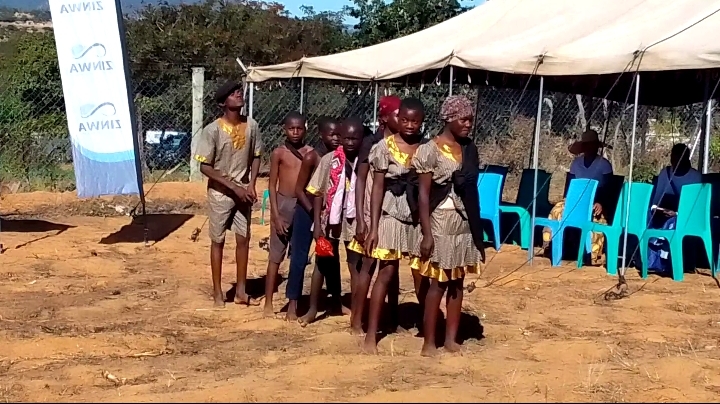
Nyanga’s rolling hills carried more than mist on Friday the 12th of June 2026, they carried drums, praise songs, and the spirit of Manicaland. At Chief Hata Homestead, the Provincial Manicaland Cultural Month came alive as schools, community groups, and traditional leaders gathered to celebrate what makes the Eastern Highlands unforgettable: its culture.
The event was organised by the Ministry of Sports, Recreation Arts and Culture, led by Mr. Zano Bore, National Arts Council of Zimbabwe to spearhead the vision 2030, enabling artists to be involved in the creative economy, create jobs, bring entertainment and reduce social vices such as drug and substance abuse and child marriages.
A showcase of talent, from classrooms to homesteads, learners from various schools took center stage alongside community performers. Dance troupes, mbira players, and storytellers turned the homestead into a living museum. Each performance carried a lesson of resilience, of ancestry, of pride in being Manyika and Hwesa. The exhibitions were immaculate: beadwork that told family histories, woven baskets from the highlands, traditional grains, herbs, clay pots fired the old way, wood carvings that seemed to breathe and among others.
One name kept coming up in front of the sculpture displays: Mr. Musekiwa. The master sculptor was present, letting visitors trace the chisel marks on stone pieces that captured Shona proverbs and daily life. His work reminded everyone that art here is not decoration, it is memory.
Chiefs and custodians led the way, the event drew weight because the custodians of tradition showed up. Chiefs Hata, Mutasa, Saunyama, and other representatives from across Manicaland sat together, uniting for one go, cultural preservation. Their presence was not ceremonial only. They blessed the performances, listened to the youth, and spoke on why culture can not be left to museums. For them, Chief Hata Homestead proved it can still be a classroom.
Taste of the day: Mahewu and traditional beer, no cultural gathering in Manicaland is complete without what’s poured, not just what’s performed. Mahewu, thick and slightly sour, cooled the crowd between dances. Traditional beer, brewed and shared the communal way, kept the atmosphere warm and welcoming. Food and drink here do more than satisfy, they bind people.
The call to revive Jekunje, but the day ended with a challenge, not just applause. One dance was missing from the program: Jekunje. Elders noted its absence and urged that it be revived. Jekunje is more than steps and rhythm, it’s Nyanga’s signature. Without it, a piece of the district’s identity stays silent. Bringing Jekunje back to Cultural Month would make Nyanga recognizable again, not just for its mountains and trout, but for a dance that carries its heartbeat.
Why it mattered? Provincial Cultural Month at Chief Hata was not just an event on the calendar. It was proof that culture thrives when schools, artists like Mr. Musekiwa, Nyanga Prince, chiefs, and communities stand in one space. The exhibitions were immaculate, the turnout was strong, and the message was clear: if we forget the dance, we forget ourselves.
Next year, with Jekunje back on the floor, Nyanga will not just host Cultural Month. It will define it.
Compiled by Bright Barwe
